Amplifying the voices of children.
Honouring the strength of families.
Growing in understanding together.
This project will capture the voices, experiences and everyday lives of children currently living with a life-altering rare epilepsy diagnosis of:
Developmental and Epileptic Encephalopathy with Spike-Wave Activation in Sleep (DEE-SWAS)
Epileptic Encephalopathy with Spike-Wave Activation in Sleep (EE-SWAS)
Continuous Spike-Wave in Sleep (CSWS)
Electrical Status Epilepticus in Sleep (ESES)
Landau-Kleffner Syndrome (LKS)
Drawing on lived experience and research insights, this project is building connections with clinicians, therapists, researchers, educators and anyone else who wants to better understand the challenges our children experience, and to help improve their quality of life.
Child and Family Voices
School, Community, Identity and Belonging.
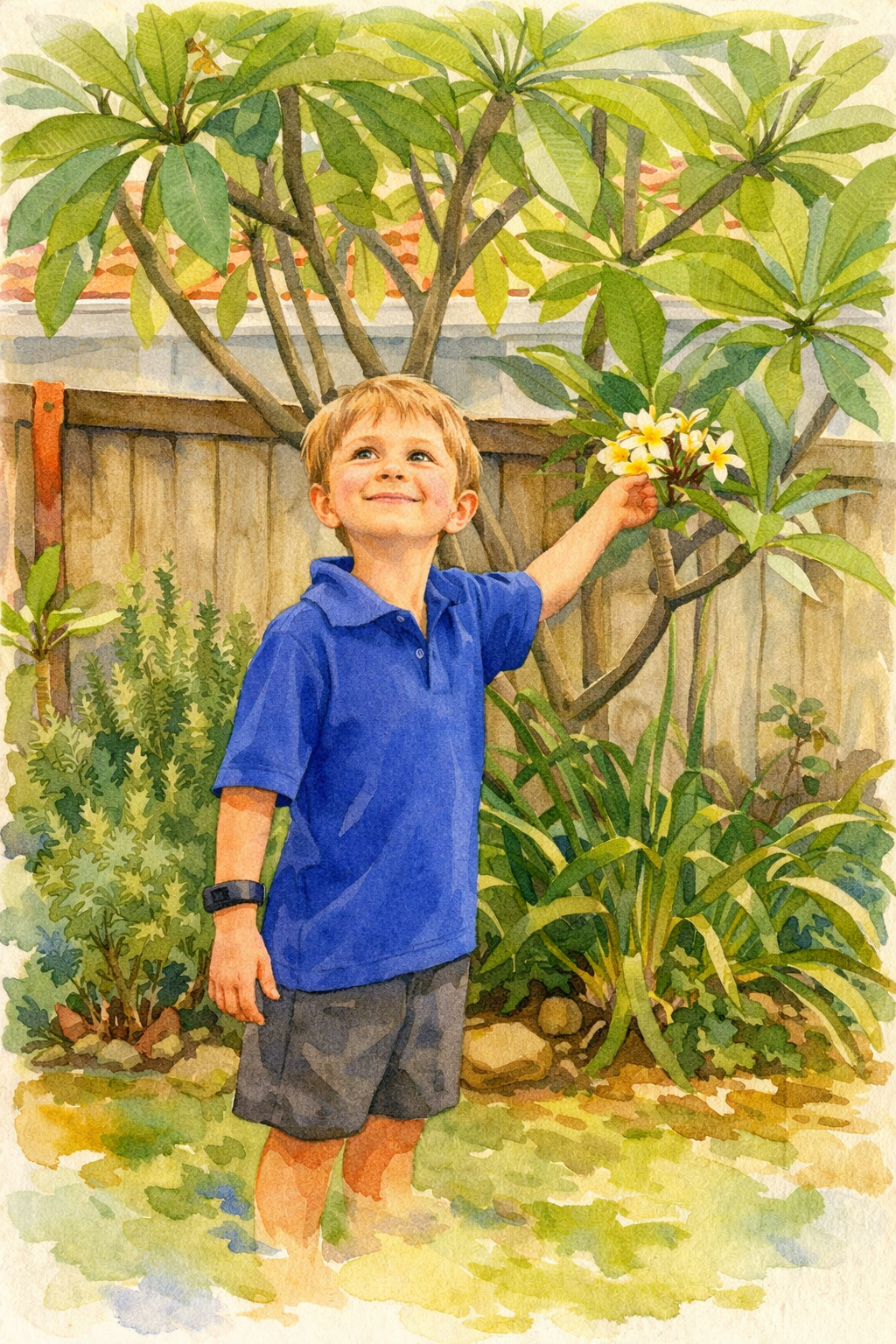
Why documenting lived experience with DEE-SWAS and related conditions is critical
These accounts are not intended to provide clinical descriptions of DEE-SWAS, EE-SWAS and related diagnoses including Landau-Kleffner syndrome (LKS), Continuous Spike-Wave in Sleep (CSWS) and Electrical Status Epilepticus in Sleep (ESES).
They show what, as families in a global network, we share with each other about what life for our children can be like, day to day.
Epilepsy research has already achieved incredible things, helping define syndromes, genetics and seizure patterns (for example, the seminal work of Ingrid Scheffer and colleagues) (1). However, in rare conditions more broadly, lived experience is less often captured in research (2).
Around 1 in 590 children are diagnosed with a developmental and epileptic encephalopathy (DEE), and more than a quarter present after age three, including children with DEE-SWAS and EE-SWAS (3). While individual syndromes such as DEE-SWAS are considered rare, DEEs are not rare in a global sense. There are around 2.4 billion children under 18 in the world, which suggests that more than 4 million children worldwide may be living with a DEE, based on current prevalence estimates (3, 4).
The burden is likely to be even higher in parts of the world where infections, birth complications and limited access to early care are more common, including regions such as sub-Saharan Africa and South Asia (5).
This site highlights real-life factors that shape everyday moments, to either hold a child with this rare epilepsy back or help them move forward in life, depending on how well their needs are understood and supported.
I am deeply grateful for the support my child’s care team has provided. At the same time, there are many everyday situations beyond clinical settings where our children live, learn and play, and where additional opportunities to support them must be identified. The goal of this global project, over time, is to document lived experiences and to find ways to amplify children’s perspectives and what families are observing day-to-day. It’s a way to increase awareness of what families are already doing to improve quality of life - approaches that could be adopted more widely. As the project has been created by a parent to a child with EE-SWAS with caregiver responsibilities and other everyday life demands such as paid work, stories will be collected and shared at the pace that is possible at any given time!
For us, there was a devastating two-year period following the onset of our child’s EE-SWAS when we were denied the education and disability support they desperately needed. Their wellbeing – and ours – severely deteriorated. Our child started school apparently typically developing and even academically advanced before the onset of EE-SWAS. At one point in the tumultuous years that followed, the assistant principal at my child's mainstream school expressed concerns that the inappropriate school environment was causing our child trauma. Yet, until an autism diagnosis could be achieved on the third attempt, the educational setting that appeared to be the best fit for their needs was denied by the state.
Many of our children share challenges with communication, cognition, behaviour, learning, participation and regulation that extend beyond labels such as autism, ADHD, intellectual disability or anxiety. These needs and the opportunities to support them are regularly reflected on and shared between families, but rarely documented in research.
At the top of my wish list would be evidence based tools and services to make difficult decisions in my child’s best interests that take into account the whole child (rather than only their fragmented distinct diagnoses and condition-specific needs). I wish I had access to a decision-making tool I could use in the busy morning time before school, to help me work out whether my child is too unwell to cope with school on a particular day. I wish there were someone I could talk things through with - someone who isn’t as exhausted as I am - when we are deciding whether to trial a new medication that is normally used in dementia, for example, but may have potential cognitive benefits for our child. I also wish there were services that could have helped our family plan for the future by providing clearer information about our child's likely trajectory and the practical implications for our employment, finances and family life, so we didn’t live in an excruciating limbo for years. A rare disease overturned the future we had planned, and we have been forced to make major life decisions under extraordinary pressure and uncertainty, without ever having access to any professional services that are equipped to help families like us. The very circumstances in which our child would have benefited from their parents being calm, capable and not distracted instead became a crisis, fighting fires on multiple fronts - financial, employment and mental health- and leaving us less able to provide stability for our child and their siblings when they needed it most.
Research and rigorous evidence remain essential. At the same time, children and families living with DEEs have urgent needs that cannot wait for traditional research timelines. In some situations, where the risks of trying new approaches are low and the potential benefits are high, we should be asking how we can learn, adapt and improve more quickly. Time is passing, opportunities are being lost to get the best outcomes for children in urgent need of better wraparound support. Their families continue to struggle. For those living with a DEE, waiting years for evidence to catch up can come at a very real cost.
Realising this vision isn't something any one group can do alone. It will require meaningful collaboration between educators, allied health professionals, clinicians, researchers, families, and the wider circle of people who know and care for these children.
Important note: Nothing on this website represents a universal experience or expert clinical, educational or disability advice.
Scheffer, I. E., Berkovic, S., Capovilla, G., Connolly, M. B., French, J., Guilhoto, L., ... & Zuberi, S. M. (2017). ILAE classification of the epilepsies: Position paper of the ILAE Commission for Classification and Terminology. Epilepsia, 58(4), 512-521. DOI: https://doi.org/10.1111/epi.13709
Von der Lippe, C., Diesen, P. S., & Feragen, K. B. (2017). Living with a rare disorder: a systematic review of the qualitative literature. Molecular genetics & genomic medicine, 5(6), 758-773.
DOI: https://doi.org/10.1002/mgg3.315Poke, G., Stanley, J., Scheffer, I. E., & Sadleir, L. G. (2023). Epidemiology of Developmental and Epileptic Encephalopathy and of Intellectual Disability and Epilepsy in Children. Neurology, 100(13), e1363–e1375. DOI: 10.1212/WNL.0000000000206758
United Nations, Department of Economic and Social Affairs, Population Division. (2024). World population prospects 2024. https://population.un.org/wpp/
Feigin, V. L., Vos, T., Nair, B. S., Hay, S. I., Abate, Y. H., Abd Al Magied, A. H., ... & Gadanya, M. A. (2025). Global, regional, and national burden of epilepsy, 1990–2021: a systematic analysis for the Global Burden of Disease Study 2021. The Lancet Public Health, 10(3), e203-e227. DOI: 10.1016/S2468-2667(24)00302-5